

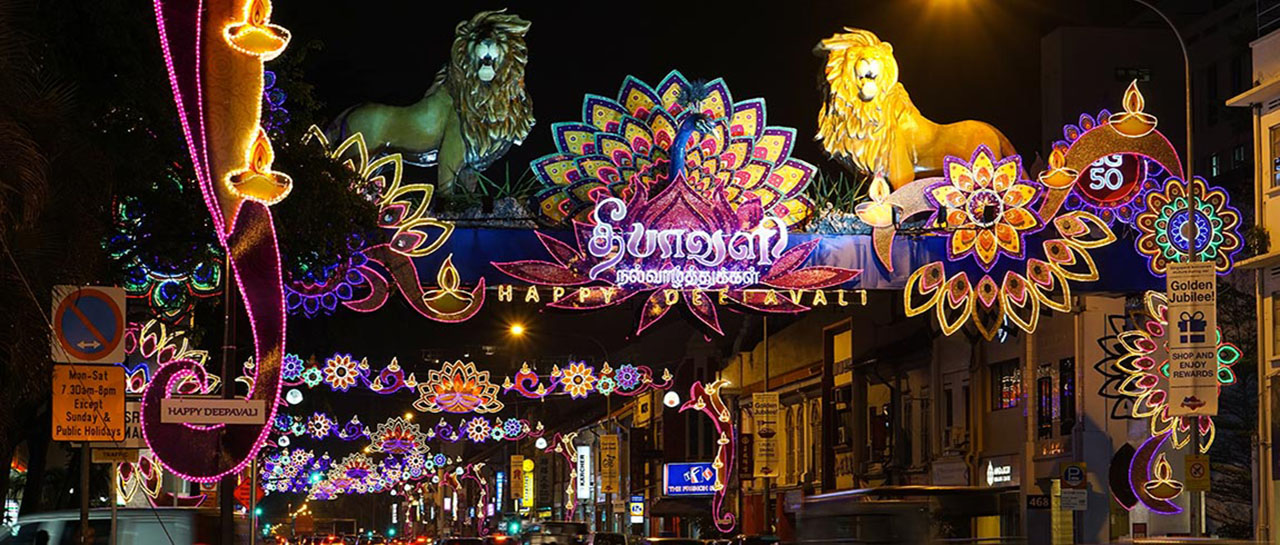
Diwali, also known as Deepavali, is one of the Hindus most significant festivals. It encompasses the five day long festivities ranging from DhanTeras to Bhaiya Dooj. The festival is not only celebrated in India, and Nepal but also all over the world. The word Deepavali means series of light lamps, which is why Diwali is often referred to as the “festival of lights”. Diwali signifies the victory of light over darkness, portraying the triumph of good over evil. Very similar indeed to the pagan celebrations of the Winter Equinox.
Non-Hindu communities such as Jains, Sikhs and Buddhists also celebrate this festival although many also have their own “festivals of light”. Jains celebrate it to commemorate the spiritual awakening or nirvana attained by Lord Mahavira, the Sikhs observe Bandi Chhor Divas with glee as it marks the day when the Sixth Sikh Guru, Guru Hargobind, unshackled the chains of the brutish prison of the Mughal Empire and freed himself.
Laxmi Puja is one of the most important parts of Diwali. According to the Puranas, Goddess Lakshmi descends to the Earth, and visits every house. She will choose to reside there as long as it is clean and tidy. Hence during everyone is busy cleaning their homes. The following points are to be considered while performing Diwali Puja:
Diwali is an auspicious occasion of spiritual as well as social significance
The festival of Diwali represents the triumph of good over evil, light over darkness, knowledge over ignorance and guides us towards the right path of life.
We wholeheartedly wish you a happy Diwali, and may Goddess Lakshmi bestow upon you, all her fortunate and prosperous blessings, and you witness a scintillating future ahead for yourself. The devotees of Goddess Lakshmi observe a day long fast on the day of Lakshmi Puja. The fast is broken after Lakshmi Puja in the evening often with fireworks so stay in with your pets.
- The first day is known as Dhanteras. "Dhan" means wealth and "teras" refers to the 13th day of a lunar fortnight on the Hindu calendar. This day is dedicated to celebrating prosperity. Goddess Lakshmi is welcomed into the home and gold is purchased. People gather to play cards and gamble. Ayurvedic doctors also honor Dhanvantari, an incarnation of Lord Vishnu who brought Ayurveda to mankind, on this day. There are a number of temples in Kerala and Tamil Nadu dedicated to Dhanvantari and Ayurveda.
- The second day is known as Naraka Chaturdasi or Chhoti Diwali (small Diwali). Goddess Kali and Lord Krishna are believed to have destroyed the demon Narakasura on this day. Demon effigies are burned in Goa in celebration.
- The third day is the new moon day known as Amavasya. This darkest day of the month is the most significant day of the Diwali festival in north and west India. Lakshmi is worshiped on this day, with a special puja performed in the evening. Goddess Kali is also usually worshiped on this day in West Bengal, Odisha and Assam (although Kali Puja sometimes falls a day earlier depending on the cycle of the moon).
- The fourth day has various meanings across India. In north India, Govardhan Puja is celebrated as the day when Lord Krishna defeated Indra, the god of thunder and rain. In Gujarat, it's celebrated as the start of a new year. In Maharashtra, Karnataka and Tamil Nadu, the victory of Lord Vishnu over demon king Bali is celebrated as Bali Pratipada or Bali Padyami.
- The fifth day (is known as Bhai Duj. It's dedicated to celebrating sisters, in a similar way that Raksha Bandhan is dedicated to brothers. Brothers and sisters get together and share food, to honour the bond between them.