

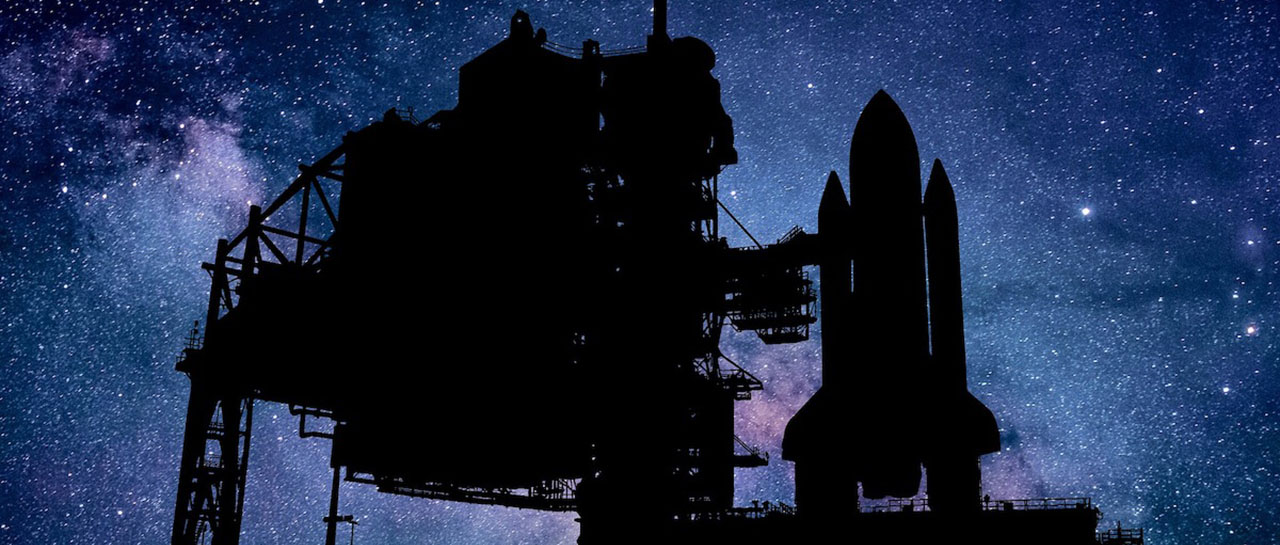
In 2011 the UN declared April 12, as the International Day of Human Space Flight in rememberance of the first man in space, Yuri Gagarin on 12th April 1961, This historic event opened the way for space exploration. It’s aim is to “promote the exploration and use of outer space for peaceful purposes and to the benefit of humankind”. Many people wonder why so many counties spend so much money exploring the solar system when there is still so much poverty on this planet. Wouldn’t the money be better spent here?
One reason may be because as we overcome the problems arising from space flight the technology discovered is then utilised in products to enhance our everyday lives.
Everyday products developed from space age technology:
Portable computers - Where would we be without our laptops and smart phones. The first portable computer, the Grid Compass, was used on multiple shuttle missions in the 1980s. Nicknamed SPOC (Shuttle Portable On-Board Computer), the computer could communicate with onboard devices and was used to launch satellites off space shuttles.
Artificial limbs - Innovations originally designed for space vehicles, including artificial muscle systems, robotic sensors, diamond-joint coatings, and temper foam, make artificial human limbs more functional, durable, comfortable and life-like.
Memory foam - was originally invented as a pad for astronaut seats that would mold to their bodies during the high forces of takeoff and landing, then return to a neutral state. This eliminated the need to customize seats to individual astronauts' body sizes. Two examples I use are memory foam shoes and the memory foam mattress topper for a good nights sleep.
Infrared ear thermometers - which allow for instant temperature capture without the risk of picking up pathogens and causing cross-infection, utilise the same technology developed for assessing the temperature of distant planets. During the current Covid 19 pandemic where would we have been if we were still dipping a mercury thermometer into disinfectant before putting it under the next person’s tongue.
Baby formula - A nutritious, algae-based vegetable oil invented by NASA scientists who were searching for a recycling agent to use during long space missions is now an additive in many infant formulas. It contains two essential fatty acids that cannot be synthesized by the human body.
Freeze-dried foods - During long space missions where every ounce of weight and inch of space aboard a shuttle must be maximized, freeze-dried foods have become a staple. Freeze-dried foods are incredibly light, and they retain their nutritional value. Once reconstituted, they are also easier and more pleasant to eat than former meal sources that were packed into squeeze tubes. Pot Noodles are one example and can be found in most supermarkets.
Scratch-resistant lenses - After NASA developed scratch-resistant astronaut helmets, the agency gave a license to Foster-Grant Corporation to continue experimenting with scratch-resistant plastics, which now comprise most sunglasses and prescription lenses.
Insulin pumps - I wonder how many lives these have saved. They were developed because NASA Needed to monitor astronauts' vital signs in space, the Goddard Space Flight Centre created monitoring systems that have been adapted to regulate blood sugar levels and release insulin as needed.
Camera phones - Now we know where “Selfies” come from. In the 1990s, NASA's Jet Propulsion Laboratory invented a light, miniature imaging system that required little energy in order to take high quality photographs from space. This technology has become standard in mobile phone and computer cameras.
CAT & MRI scans - NASA's digital signal technology, originally used to recreate images of the moon during the Apollo missions, is the underlying technology that makes CAT scans and MRIs possible.
Workout machines - You know those workout machines at the gym. They were developed because prolonged exposure to zero-gravity leads to bone loss and muscle atrophy, NASA created workout machines to enable astronauts to maintain physical fitness while in space.
Firefighting equipment - The polymers created for use in space suits have been invaluable in creating flame-retardant, heat-resistant suits for firefighters. Newer suits also feature circulating coolant to keep firefighters from succumbing to heat and advanced breathing systems modelled after astronaut life support systems.
DustBusters - During the Apollo moon landings, NASA partnered with Black & Decker to invent various battery-powered tools for drilling and taking rock samples in space. This led to the creation of the ultra-light, compact, cordless DustBuster.
3D food printing - This one I must check out, for when I can’t be bothered to cook. The ability to cook food on long space missions is no longer impossible with the invention of 3D food printers. This technology is now being refined for commercial use for the production of chocolates and other confections as well as to create nutritious foods for diabetics and others with specific dietary needs.
LASIK - Technology used to track astronauts' eyes during periods in space in order to assess how humans' frames of reference are affected by weightlessness has become essential for use during LASIK surgery. The device tracks a patient's eye positions for the surgeon.
Shock absorbers for buildings - Shock absorbers designed to protect equipment during space shuttle launches are now used to protect bridges and buildings in areas prone to earthquakes.
Solar cells - I do believe in solar powered energy but I can’t say I enjoy looking at solar farms. Out of a need to power space missions, NASA has invented, and consistently improved, photovoltaic cells, sharing the advancements with other companies to accelerate the development of solar powered technology.
Water filtration - In the 1970s, NASA developed filtration systems that utilized iodine and cartridge filters to ensure that astronauts had access to safe, tasteless water. This filtering technology is now standard in many countries of the world.
Better tires - After the Goodyear Tire and Rubber Company invented the material used in NASA's Viking Lander parachute shrouds, the company began using it in its everyday radial tires. The material is stronger than steel and adds thousands of miles of life to the tires.
Wireless headsets - Ear pods. No entangling leads whilst listening to music. Along with two airline pilots who'd invented a prototype of a wireless headset, NASA built a light, hands-free communication system that would allow astronauts to communicate with teams on Earth. The technology was utilized in the Mercury and Apollo missions.
Adjustable smoke detector - In partnership with the Honeywell Corporation, NASA improved smoke detector technology in the 1970s, creating a unit with adjustable sensitivity to avoid constant false alarms.
Invisible braces - After NASA and Ceradyne invented a clear material that could protect radar equipment without blocking the radar's signal, Unitek Corporation/3M teamed up with Ceradyne, using the material to invent invisible braces.
Lifeshears - Lifeshears are a tool that can be used in emergency situations to cut into cars or collapsed buildings to rescue people trapped inside. I bet there are many people whose lives have been saved from accidents with these. The technology came from the pyrotechnic mechanism used to detach a space shuttle from its rocket boosters after launch.
Grooved pavement - The requirements for landing space shuttles led NASA scientists to do extensive research on minimizing hydroplaning – when vehicles slide uncontrollably on a wet surface – on runways. They discovered that cutting grooves into runways helps channel water away from the runway and significantly reduces accidents. Many highways and airports now have grooved pavements.
Air purifier - In the sealed, artificial environment of a spacecraft, attempts to grow plants have led to ethylene buildup. NASA invented an air purifier for the International Space Station that is now used widely on Earth – everywhere from restaurants, to hospitals, to refrigerators – to remove ethylene, which hastens decay, as well as other particulates and pathogens.
Home insulation - keeping our heating bills down. NASA began experimenting with insulation technology for the Apollo space crafts and suits, leading to the invention of common construction insulation.
Ice-resistant airplanes - making our skys safer. Ice is a real threat for shuttles in space, and NASA has devised multiple electronic solutions to prevent ice formation on spacecrafts, some of which are now used on commercial aircraft.
LEDs - Intended for use to help in growing plants aboard space shuttles, NASA's LED technology has been utilized in the development of LED medical devices that relax muscles and relieve pain in soldiers, cancer patients, and those with Parkinson's disease.
Computer mouse - While searching for a way to increase interaction with onboard computers and allow users to perform tasks like manipulate data, NASA and Stanford researchers developed the first mouse which are still in use and of course developed into the modern track pad.
- A shock-absorbent rubber moulding designed for astronauts' helmets inspired what is now a common feature in the soles of modern athletic shoes.