

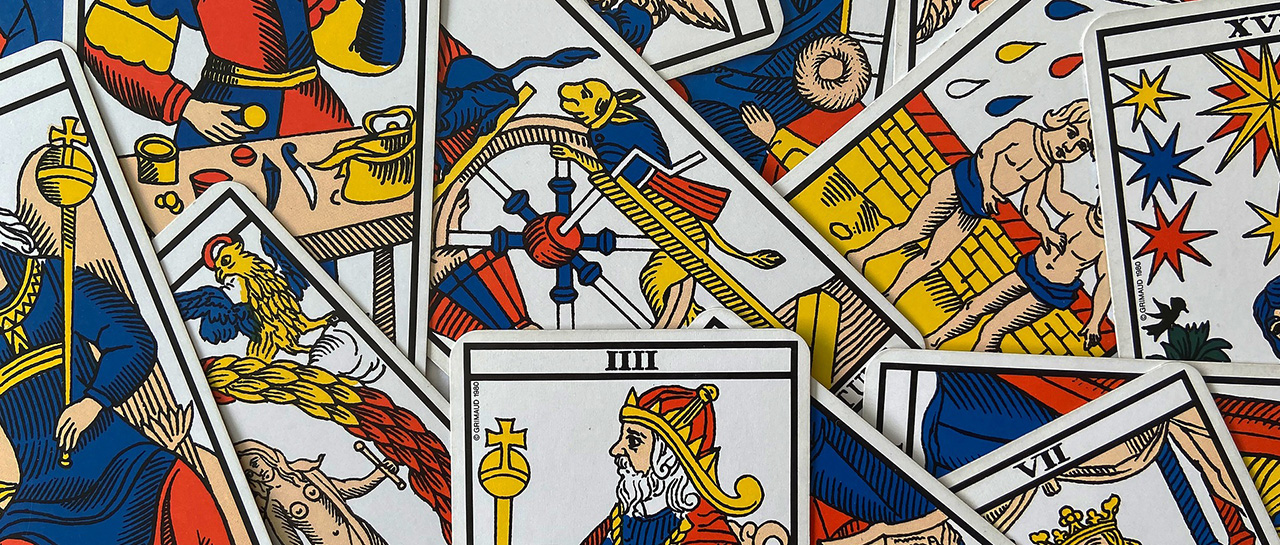
When you pick up a pack of 56 playing cards to play poker, bridge, canasta, rummy or any other card game, little do you realise that you are picking up a modern version of The Tarot deck known as the Minor Arcana, and which is why there are some people who can and do “read” a modern pack of playing cards. So very briefly, I will give a description of what tarot is before going into the History of Tarot.
Basically, there are two parts to The Tarot. The Major Arcana and Minor Arcana. The Major comprises of 22 cards and the Minor 56 cards broken down into 4 suits:
Swords which have become spades
Cups which have become hearts
Wands (sometimes called rods or staffs) which have become clubs
Pentacles (sometimes called coins) which have become diamonds
When people think of The Tarot, they usually think of the occult, mysticism and divination. Not surprisingly, as the true origins of the cards are still cloaked in mystery and probably will remain so. This has resulted in nearly as many theories about tarot as there are different types of decks and different interpretations of the cards themselves.
 The symbolism they contain and the esoteric and metaphysical doctrines they represent cross the boundaries of all the different ancient schools of knowledge and teachings. Many believe the cards have their roots in the mystery schools of ancient Egypt, classical Greece, ancient Rome, China and India. Others say they were invented in the 14th century by an Italian noble as a deck of cards, very much in their own right. Over the centuries many people developed the belief that the cards were “evil”, mainly through a lack of understanding about what they were for and how they worked. Some say “magic is just undiscovered science” and in this case it would be true.
In my youth I was terrified of all things esoteric, and Tarot in particular. As I got older, I chose denial rather than fear. It was illogical to expect them to work; if you shuffle the cards and lay them out, they will say one thing, and if you do it again, the cards will say something else. When I was invited to learn Tarot, I set out to prove it didn’t work and now not only do I read professionally, but I am also writing a book on it. A testament to how knowledge enables us to let go of fear.
Some people believed and still seem to believe, that knowledge is power, so people have done their best not only to keep things secret, or confined to a chosen few, but also to hype it up into something which it is not. Tarot became feared because the vast majority did not “know” about it. In fact, even today many people believe knowledge is power and do their best to “know” as much as everyone and everything they can to put them “ahead” of the pack. Some even resort to manipulation and blackmail to ensure they climb to powerful positions in government and the corporate world. It is a shame to think that in over 6000 years the world has not changed that much.
The Myths
The Jewish Torah
 The 22 most powerful Major Arcana cards are based on the Hebrew system of numbers and alphabet. In fact, the name tarot is closely related to the Hebrew word “Torah”, meaning “the Law” and is applied to the five books of Moses found in the Old Testament. This word is a derivation of taru which means “to enquire, to seek an answer”. It is thought that the 22 Major Arcane are a representation of the 22 laws and principles of the ancient wisdom teachings and the Minor Arcana have more to do with the application of these laws and principles to our daily lives.
Ancient Egypt
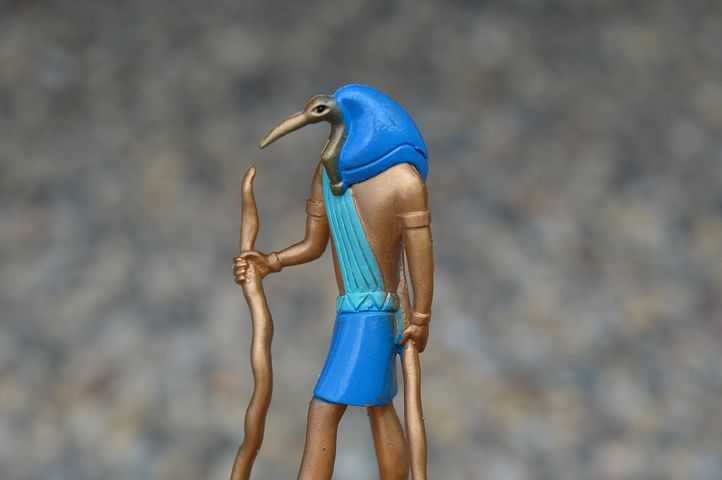 Many people believe The Tarot originated in ancient Egypt because it is often connected to the Egyptian God Thoth (also called Hermes Tresmagistus in the ancient Hellenic traditions), known as the God of Science and Magic whose name derives from the Egyptian word taru meaning to enquire or to seek an answer. According to a legend going back to around 2000BC, Thoth gave the Egyptians 22 hieroglyphs depicting the mysteries of the universe, which are said to have been placed in the rumoured but, yet to be discovered, secret temple beneath the sphinx. The word Tarot may also have its roots in the ancient Egyptian word ta-rosh which means “the royal road” sometimes known as the “way of kings”. Many think they are representations of the 22 laws and principals of ancient wisdom teachings.
Considering how close Egypt and Israel are to each other, the similarities between the two schools of thought is not at all remarkable and lends weight to these beliefs.
Gypsies
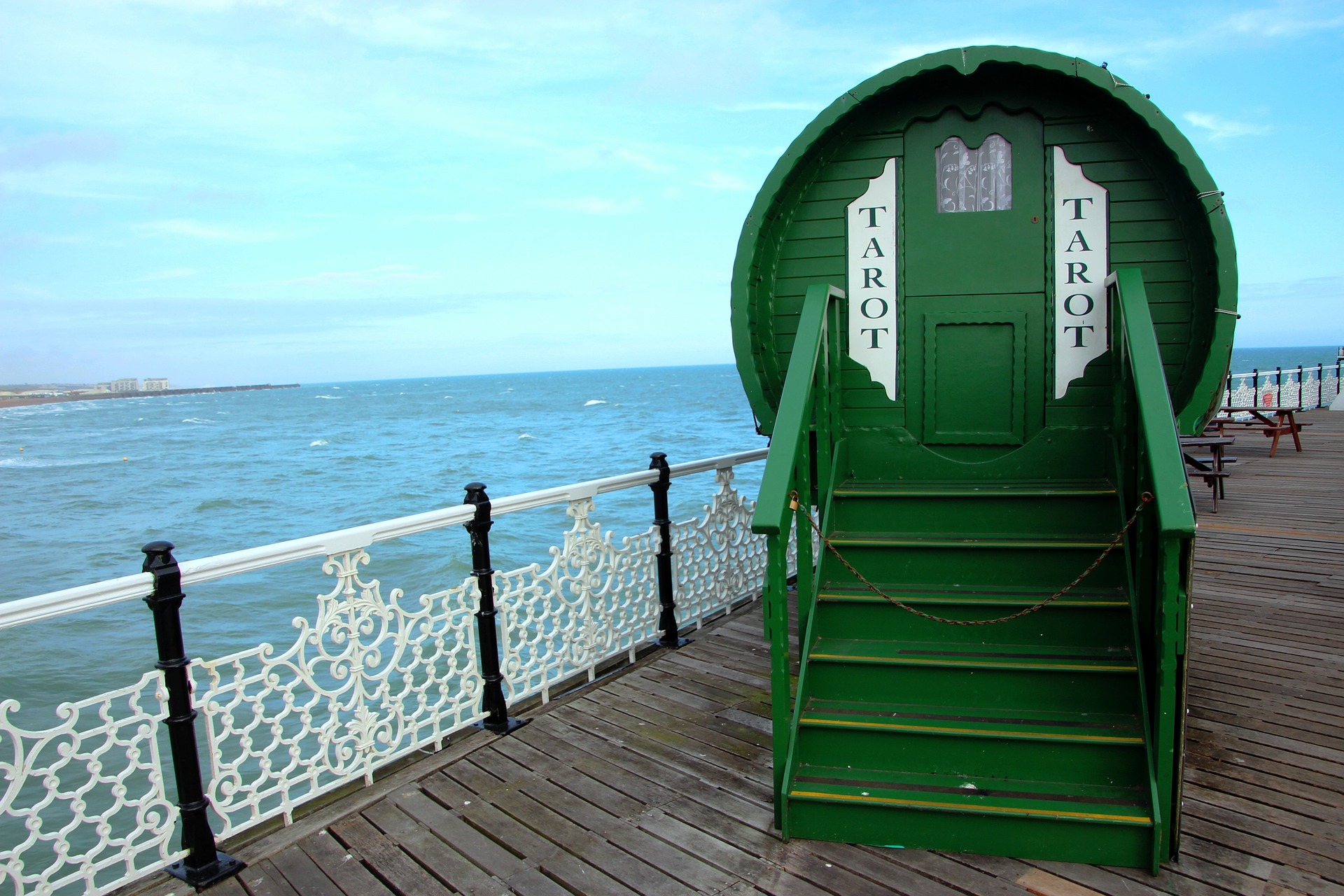 A theory put forward by Gerard Encausse, in his book “Le Tarot des Bohemiens” published in 1889, not only decided the word Gypsy was derived from the word Egyptian but also that the gypsies reputedly possessed a “bible of bibles” called The Tarot. We know ancient peoples moved around the then known world and that beliefs and knowledge moved with them. We can see the influences of this everywhere, especially if you study the movement of the ancient religions around the world, so this could have originated as the story of the wandering Jews with their copy of the Torah.
The Alexandrian Library
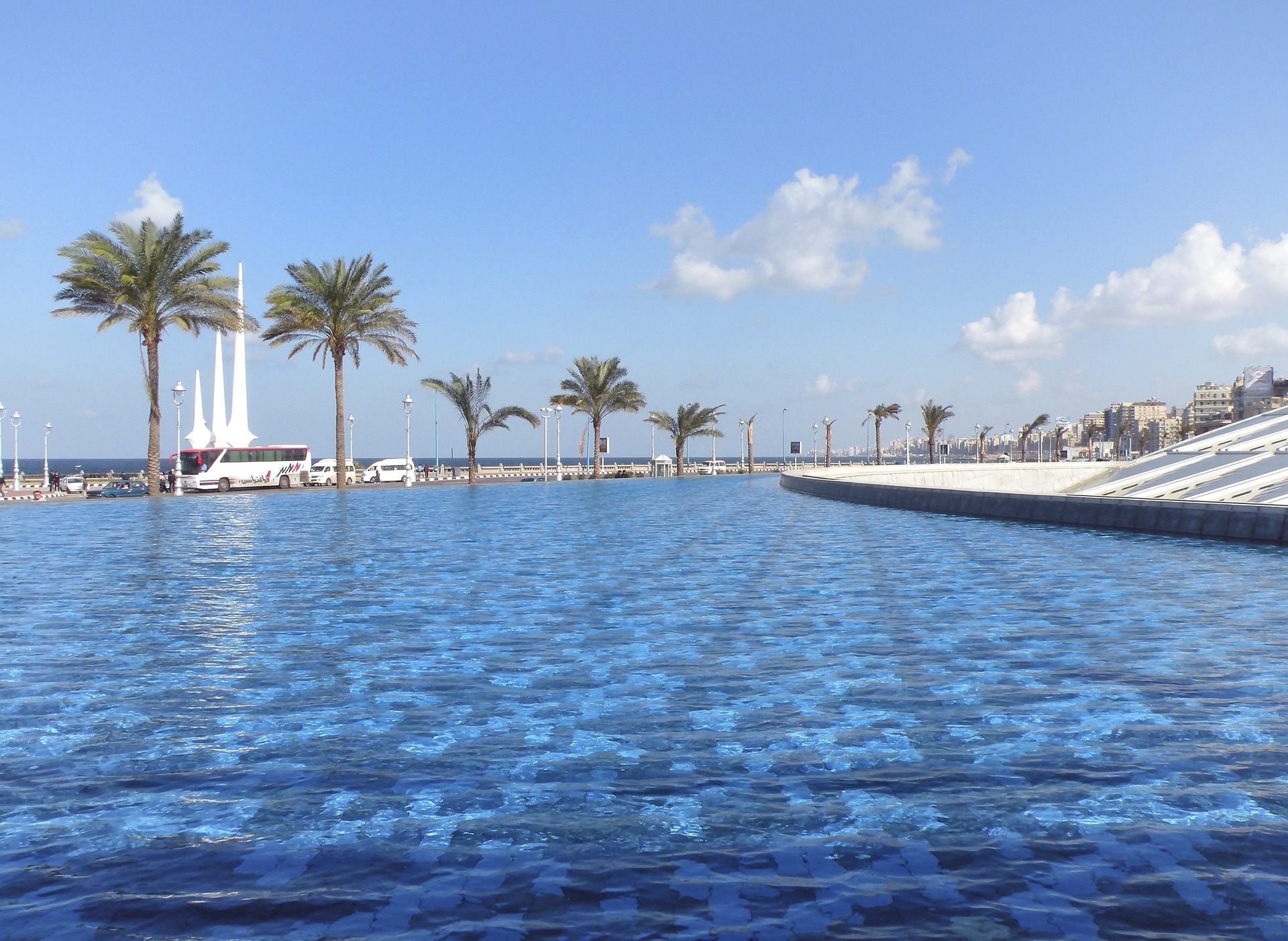
Another theory places the origin of The Tarot in Alexandria. It is said, a group of very wise men, worrying about “what if” the famous Alexandrian Library was destroyed, gathered together to create one great work that would contain all the wisdom of the world. Because there was no common language, they created The Tarot as a symbolic language to ensure the knowledge and wisdom of the world would not be lost by hiding it in the form of a card game.
India

There is also a theory pertaining to Buddhism with the Fool representing a wandering monk (or even Buddha himself) seeking enlightenment through the archetypes of the remaining Major Arcana cards. (I even know devout Christians who liken the Major Arcana as the journey to Jesus and God.) Others link the four Minor Arcana suits to the four Hindu castes. Cups being the Brahmins or priests, Pentacles to the Vaisyas or merchants, Wands being the Sudras or serfs and Swords being the Kshatriyas or warriors.
China
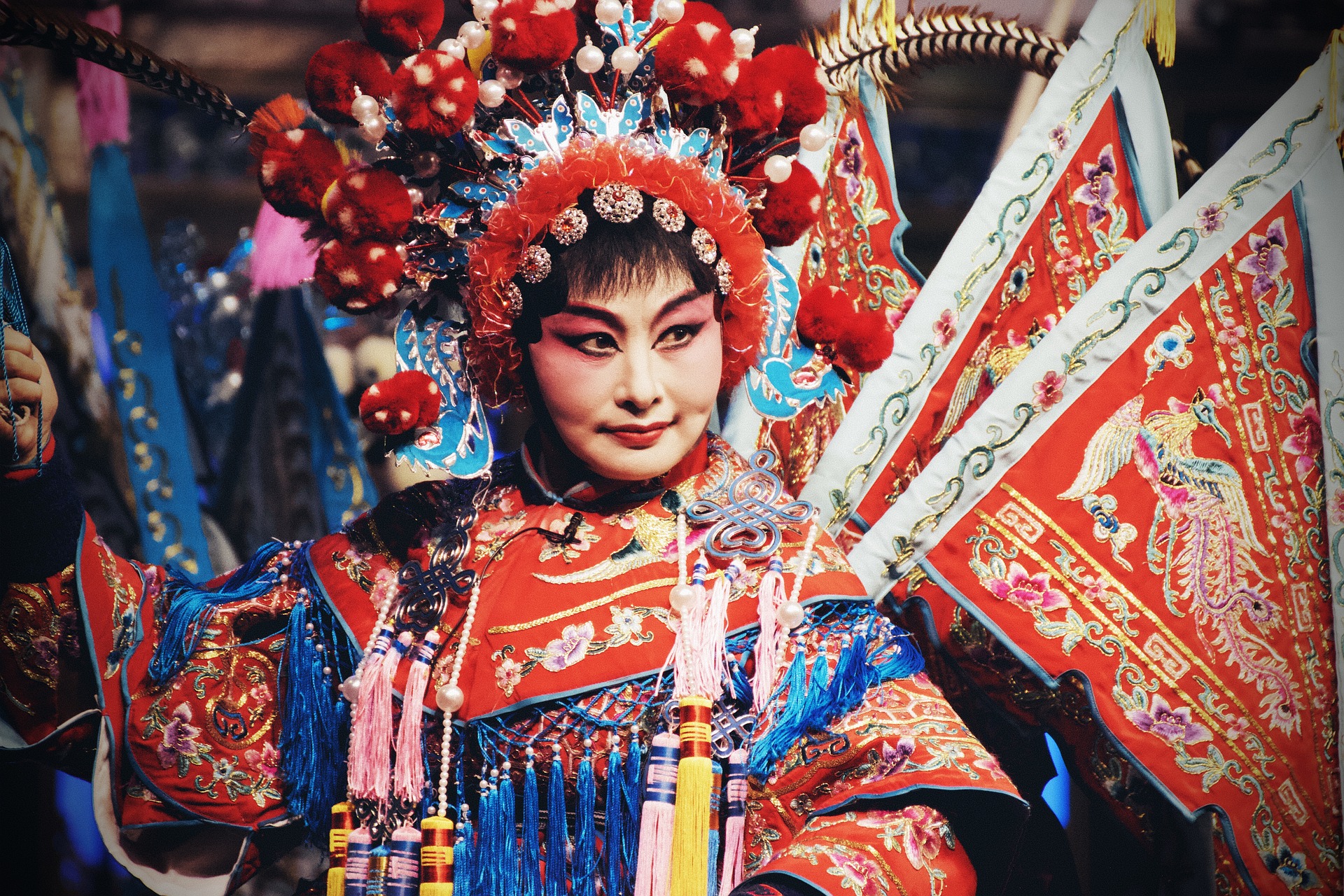
There have been suggestions the Tarot originated in China, where playing cards where definitely in use before the eleventh century AD. Many people believe that the Chinese may have developed the art of printing as early as the 13th century and that cards may have made their way down the silk road to Egypt. At the same time the symbology and mythology may have travelled up the silk road to China as well.
The Facts
Despite all the speculation about The Tarot’s origin there are some historical facts worth considering. Evidence exists to show The Tarot came to Europe about the same time as other forms of playing cards, in the early to mid-1300's. In 1332, history records that Alphonse XI, King of Leon and Castile, banned the use of any kind of cards (but there is no specific reference to The Tarot).
In 1377, while living in Switzerland, a German monk named Johannes wrote an essay in which he referred to a game of cards: “...in which game the state of the world as it is now is most excellently described and figured. But at what time it was invented, where, and by whom, I am entirely ignorant.” He goes on to describe not a Tarot deck, but something more like the playing cards we know today, with fifty-two cards in four suits.
In 1392, the household accounts of Charles VI of France record a payment being made to “Jacquemin Gringonneur, painter, for three packs of cards, gilded and coloured and ornamented with various devices, supplied to the King for his amusement”. Seventeen of these cards are today preserved in the Bibliotheque Nationale in Paris.
There is evidence dating back to 1425 that The Tarot game was invented by the Italian wealthy classes as a game. The basic rules of the “Tarot” game appear in an Italian manuscript of Martiano da Tortona. We know for sure that cards like The Tarot we know today were used in Italy in the fifteenth century as a popular game called Tarocchi (known as Trumps). The game is a sort of distant cousin to Bridge, quite popular for a time among the royalty in Italy. The pack consisted of more than one hundred cards and included Signs of the Zodiac and so-called Christian Virtues. Early versions of these cards were all individually hand-made, since they preceded the printing press, and consequently designs can be seen to incorporate the social and religious themes of the day, making fascinating evidence for both the historian and the student of the mystery sciences. In 1423, St Bernadino of Siena, a celebrated Franciscan preacher, denounced all cards as the creation of Satan and the puritanically-minded all over Europe followed suit.
Although very little reference can be found regarding The Tarot during the sixteenth and seventeenth centuries, it seems a great many packs of cards were being invented for educational purposes. In 1509 Thomas Murner designed a pack of sixteen suits intended to teach logic, and later, another to teach law. In 1603 a German pack was produced which depicted scenes from the Bible, and in a pack produced in Paris in 1644, scenes from Greek mythology with explanatory notes are to be found. A pack printed in England in 1692 was used to teach the art of carving meat and fish. The King of Hearts is shown dealing neatly with a sirloin of beef and the King of Clubs dissects a pickled herring.
Even now cards are used as a simple and fun way to teach all sorts of subjects. I remember using flash cards to teach my children to read.
In 1704 a priest named Menestrier suggested that Gringonneur was the original inventor of tarot cards and that he devised them to divert Charles VI’s mind during the unfortunate king’s recurrent fits of madness. The first record of The Tarot being associated with the occult is attributed to Antoine Court de Gebelin, a relatively obscure Parisian mason, who wrote about the deck in 1781, three years before his own death. He is said to have “discovered” a lot of the standard myths about The Tarot which were later popularised by others (it came from ancient Egypt, the Major Arcana is related to the Kabala, etc.).
It was Eliphas Levi in the 1850s who first gave The Tarot its important place in occultism, which it has since retained. He is believed to have derived the name Tarot from rota, the Latin for wheel or circle, which he connected in turn with the labarum, an early Christian emblem of Jesus. He also thought the Martinists and Rosicrucians of the late eighteenth century had best understood the true meaning of The Tarot. From here The Tarot caught on with some English mystics such as S L Mathers (whose mistranslation of Levi brought us the suit of pentacles),
A E Waite, and Aleister Crowley. The Tarot received a lot of attention from these people, and they created a large body of writing on the use of The Tarot. For the most part they thought divination was a “lower” use of the cards. Ideally, they should be used to understand the eternal mysteries of life, in conjunction with whichever magical order they were involved with. Of course, divination has always been the most popular use for the cards. In 1910 A E Waite and Pamela Colman Smith introduced what is now the most well-known tarot deck in the world - The Rider-Waite Tarot. Since this was the first time that a Tarot deck had been published with a book on how to use it, the mystic world of The Tarot was now available to everyone.
Tarot images contain the great, universal and archetypal symbols from around the world which embodies the great human spiritual journey. A picture speaks a thousand words and the symbology easily translates across language and cultural barriers. The symbols are easily recognised by Eastern and Western mystics alike and easily connect many mystical and esoteric traditions around the world. The Tarot with its rich layers of symbolism, imagery, and ancient wisdom still contains what time and many cultures have failed to suppress.
Whatever their origins, Tarot operates from a world of symbolic imagery allowing us access to both conscious and unconscious knowledge. Tarot is a helpful tool for understanding ourselves, others and our world. Today there are literally hundreds of different Tarot decks available. The symbolism and names of certain cards differ in some respects, but the awe and wonder remain. Even though The Tarot was banded by the Catholic church and denounced as evil back in the middle ages, I know of many devout Christians who use the symbolism of The Tarot to aid their struggle to get closer to Christ.
Joylina is a Professional Spiritual Consultant and Expert Tarot Reader/Teacher with over 20 years experience. To learn more about the History of Tarot and the Cards see my book Traditional Tarot - In Focus Reimaged for Modern Times available for Amazon or for a signed copy Contact Joylina. Alternatively to learn how to read the cards yourself there is the Simply Tarot Course fully supported by Joylina herself.
J